
Your cart is empty.

Is this the new star ingredient?
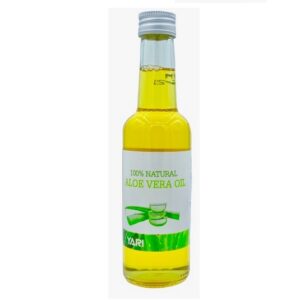
While the rise of organic cosmetics has restored this plant to its former glory, legend has it that Queen Nefertiti owed her beauty to it and that Aristotle used it to treat the wounds of his disciple Alexander the Great! Packed with water and active ingredients that it stores to survive in desert climates, aloe vera, composed of 99% water, concentrates over 150 elements in the remaining 1%, including vitamins, minerals, enzymes, amino acids, and acemannan, a complex sugar that retains water in the plant. This is why it is found in so many products. Organic aloe vera cultivation is well-developed. Inexpensive, it can replace hyaluronic acid and/or allantoin.
Are all aloe vera products the same?
There are over 400 species, which grow in hot and dry regions. The one of interest to cosmetics is primarily aloe vera (Aloe barbadensis in the list of ingredients), and sometimes Aloe ferox from South Africa.
Is pure aloe vera gel good for everything?
It's certainly great as an after-sun lotion, after shaving, on a minor burn or irritation. But it's best used as a supplement and doesn't replace a cream. It hydrates, but doesn't nourish, and is by no means sufficient for dry skin.
Is the sheet used as is?
Absolutely not! It requires some handling. Located beneath the green rind, the reddish-yellow latex contains aloin, which is toxic and highly irritating. "Never handle an aloe vera leaf without gloves," advises Valérie Marcadet, director of the cosmetics division at Léa Nature. It's the translucent pulp at the heart of the leaf that provides the healing properties, and extracting it without leaving any traces of aloin is very delicate. To obtain it, cut the leaf lengthwise after removing the spines. Do not scrape the edges or squeeze the leaf. Finally, use it quickly, as it oxidizes very rapidly. Furthermore, do not use aloe vera plants growing in your home. While reputed to have pollution-reducing properties, its leaves can contain the heavy metals they have absorbed.
Is it the same in gel or powder form?
Not really. Most cosmetics are formulated with a powder obtained after grinding and drying the pulp; "it's lighter and there's no risk of oxidation or contamination," explain the manufacturers. However, Valérie Marcadet points out, "we have proven that the gel is much more concentrated in acemannan, vitamins, and minerals than the powder, and demonstrated 24-hour moisturizing efficacy for the gel, which is less effective with the powder." To distinguish them among the ingredients, the gel appears as Aloe barbadensis leaf juice and the powder as Aloe barbadensis leaf juice powder
| Weight | 0.5 kg |
|---|
Based on 0 reviews
Be the first to comment on “Aloe vera”
Similar products
-
COSMETICS , Hair Care
Activilong Actigloss Nourish Kit No-Lye Relaxer Macadamia and Jojoba Normal Regular
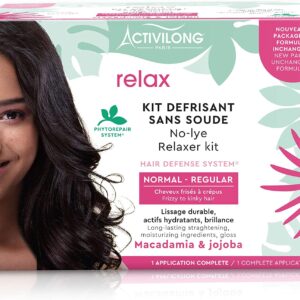 COSMETICS , Hair Care
Activilong Actigloss Nourish Kit No-Lye Relaxer Macadamia and Jojoba Normal Regular
- NORMAL – REGULAR for fine to normal hair
- Long-lasting smoothing – Moisturizing agents – Shine
- NEW! ACTIVILONG has created the ACTIGLOSS NOURISH range for nourished and infinitely shiny hair. It combines Macadamia, renowned for its moisturizing and protective properties, with Jojoba, known for bringing vitality and shine to hair. ACTIGLOSS NOURISH offers a complete routine that intensifies and prolongs shine while nourishing the hair.
- This lye-free formula, with its creamy texture, allows for easier application and incomparable results. Hair is manageable and radiantly shiny.
- PRECAUTIONS FOR USE: Read the instructions carefully before use and follow the directions.
- NORMAL – REGULAR for fine to normal hair
- Long-lasting smoothing – Moisturizing agents – Shine
SKU: 3327520005023 -
There are no reviews yet.